
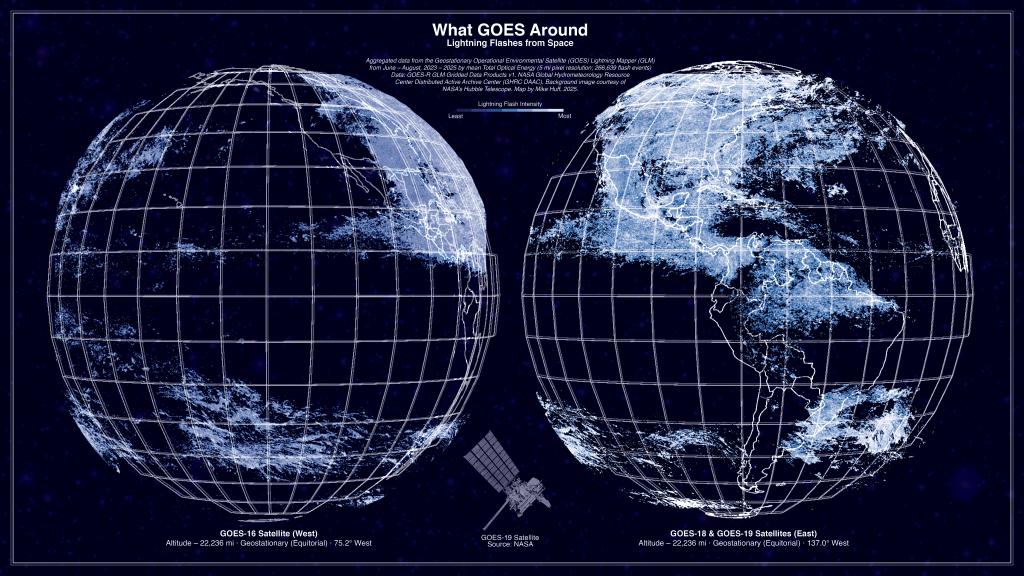
This map is a science project, looking at data captured by the Geostationary Operational Environmental Satellite (GOES) network and involving a heck of a lot of Python programming. More info on the GOES network is provided by NASA here: https://science.nasa.gov/mission/goes/
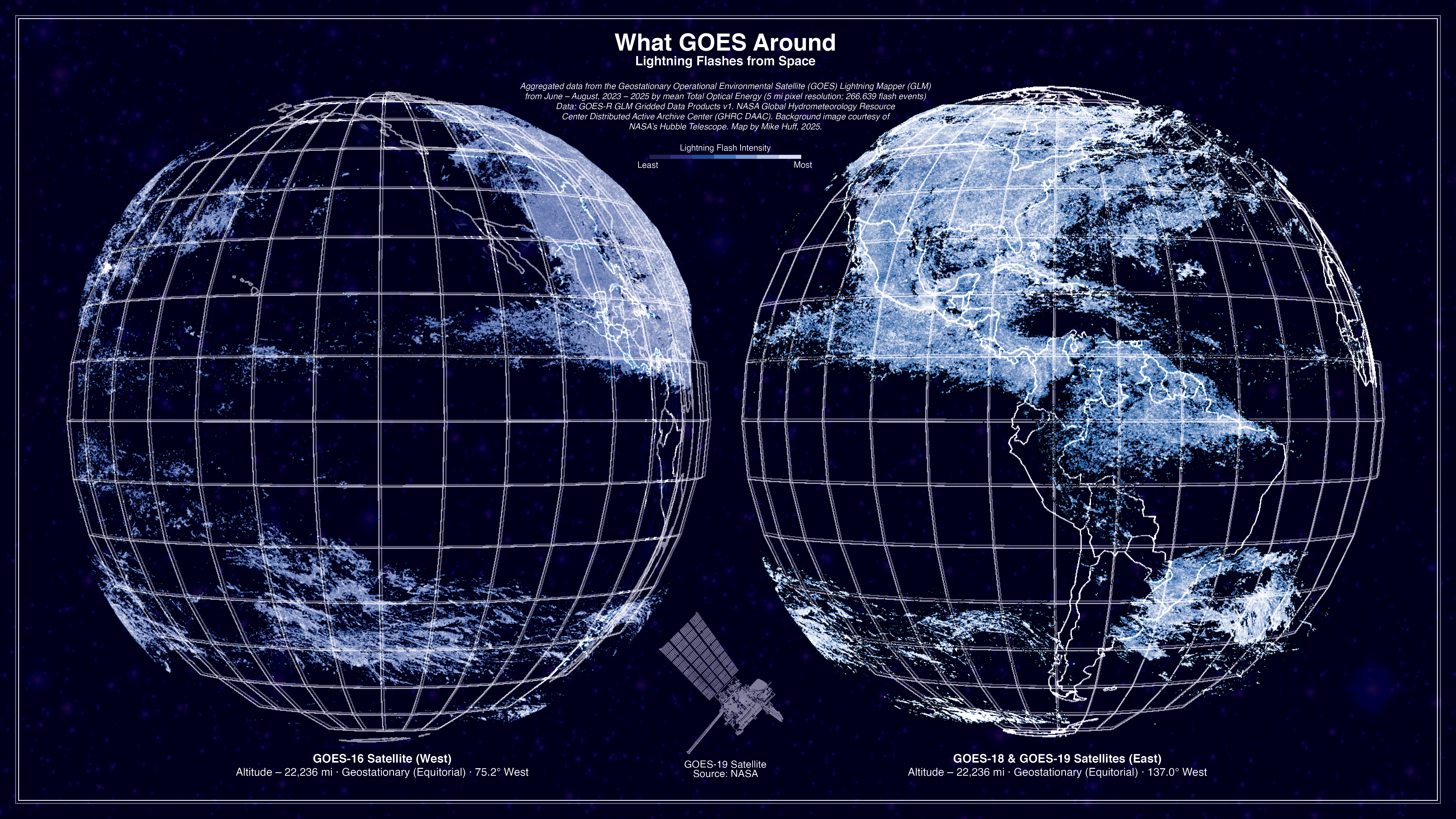
The GOES network captured an array of environmental data, including lightning flashes detected from space. This map shows a massive raster made from joining 260,000+ individual lightning flashes captured from both the GOES-West and GOES-East satellites (each consistently flying above a certain spot on earth, capturing that range of view). This effort involved downloading around 300 gigabytes of lightning flash data from NASA’s EarthData Downloader website (found here) and doing some heavy-duty Python processing to generate, clean up, and lay out all of this data.
NASA’s EarthData Downloader website allows you to select certain days, months, and years of available data to download batches of data as NetCDF files. Be warned, these downloads take a considerable amount of time if you want to grab an entire month or even a couple weeks.
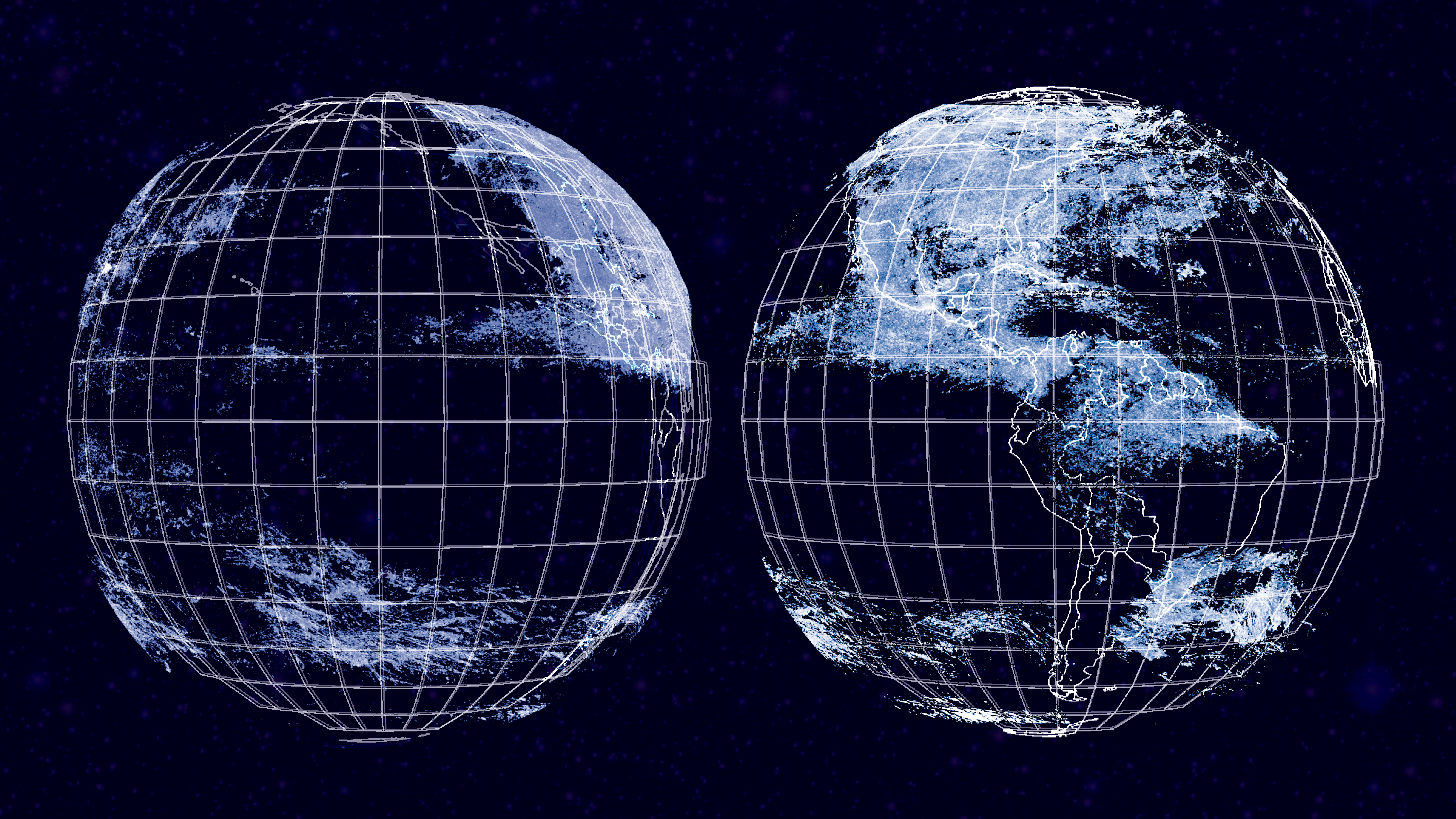
I made this map in 4K+ resolution at 16:9 aspect ratio for digital consumption, and have created a version without any text or map elements for use as a desktop wallpaper.
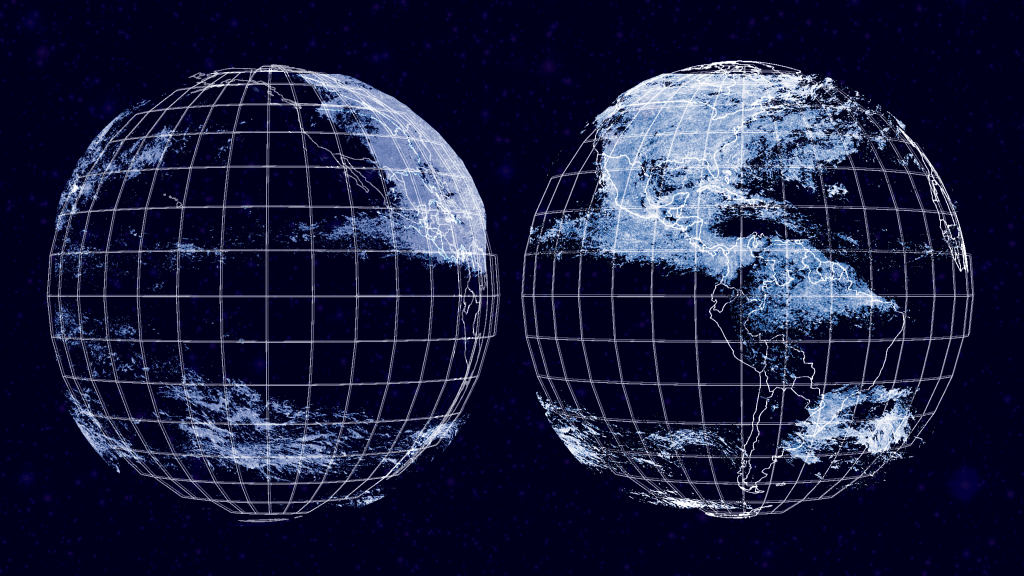
Feel free to download in full quality using the button below!
I’ve also cleaned up my Python code, written some documentation for it, and uploaded to GitHub so you can give it a try too! The Python code is separated into six Jupyter Notebook scripts, which I produced (and can be run for yourself) in a compiler software of your choice. I use Microsoft’s Visual Studio Code.
 HuffMaps
Leave a comment